
‘White on White’ Review: The Camera Lens Is an Instrument of Violence in a Haunting Colonialist Reflection
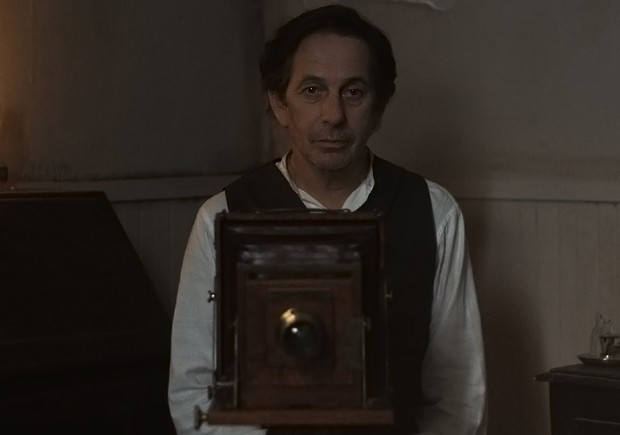
Voyaging picture taker Pedro is a drawn, aloof sort, who likes to allow his camera to communicate everything. Regardless of whether he’s shooting a shy lady of the hour or a group of white huntsmen presenting with their Indigenous human kill, his aura is apathetic, his forehead wrinkled, looking for created flawlessness in the most shaking of pictures. “White on White” similarly invokes bewitching magnificence from horrible recorded grotesqueness, however it’s careful all through of the camera’s conspiratorial limit with regards to viciousness. As cold and calm and witchily hypnotizing as an evening snowfall, Spanish-Chilean chief Théo Court’s imposing second element considers an overwhelming section of South America’s colonialist history through the eyes of somebody immediately a culprit and a spectator — implicitly asking, at one point, what the distinction even is.
A capturing and inconspicuously testing Chilean accommodation for the worldwide element Oscar, “White on White” first flew on the celebration circuit in 2019, winning honors in Venice’s Horizons sidebar, however has simply streamed through to theaters this year. That is a fitting sufficient direction for a movie that is itself the slowest and most reduced of consumes, with Court (returning 10 years after his presentation highlight “Ocaso”) taking as much time as is needed to build up a crisp, unblemished visual language that, incidentally, contains every one of the hints to a burning political undertow.
Per the title, “White on White” is a dramatization of fine upright degrees and difficult to-understand inspirations, in which the wrongdoings of provincial pioneers and their representatives are assessed on the palest, most minutely separated of grayscales. All things considered, Court tracks down a lot of space for obscurity here, starting with DP Jose Angel Alayon’s early on montage of high-contrast, Ansel Adams-style snowscapes — a prohibiting welcome to balance de-siècle Tierra del Fuego, where a much-dreaded (and never seen) white landowner, Mr. Porter, has bloodily guaranteed an enormous field of infertile land. Shadows rule, as well, in his dull, repeating house, where Pedro (the dependably brilliant Alfredo Castro) has been gathered to take Porter’s pre-wedding pictures.
The man of the hour is too occupied to even consider joining in; the lady, Sara (Esther Vega Pérez Torres), ends up being a simple kid, wrapped up in antique trim like an embellished doll. Taboo to give more normal light access to the room — as clear a sign as any of things to go under Porter’s remote order — Pedro looks for sensualism in the murk, at last pulling Sara’s dress clear of her shoulders to acquire the ideal impact. It’s not the last time he’ll disregard and corrupt one more body in quest for the right picture. Watchman, satisfied with the outcomes, employs Pedro to remain on as a sort of appointed bequest photographic artist, recording his spread and the day by day work of his staff.


